Collective Spotlight: Meredith Bove
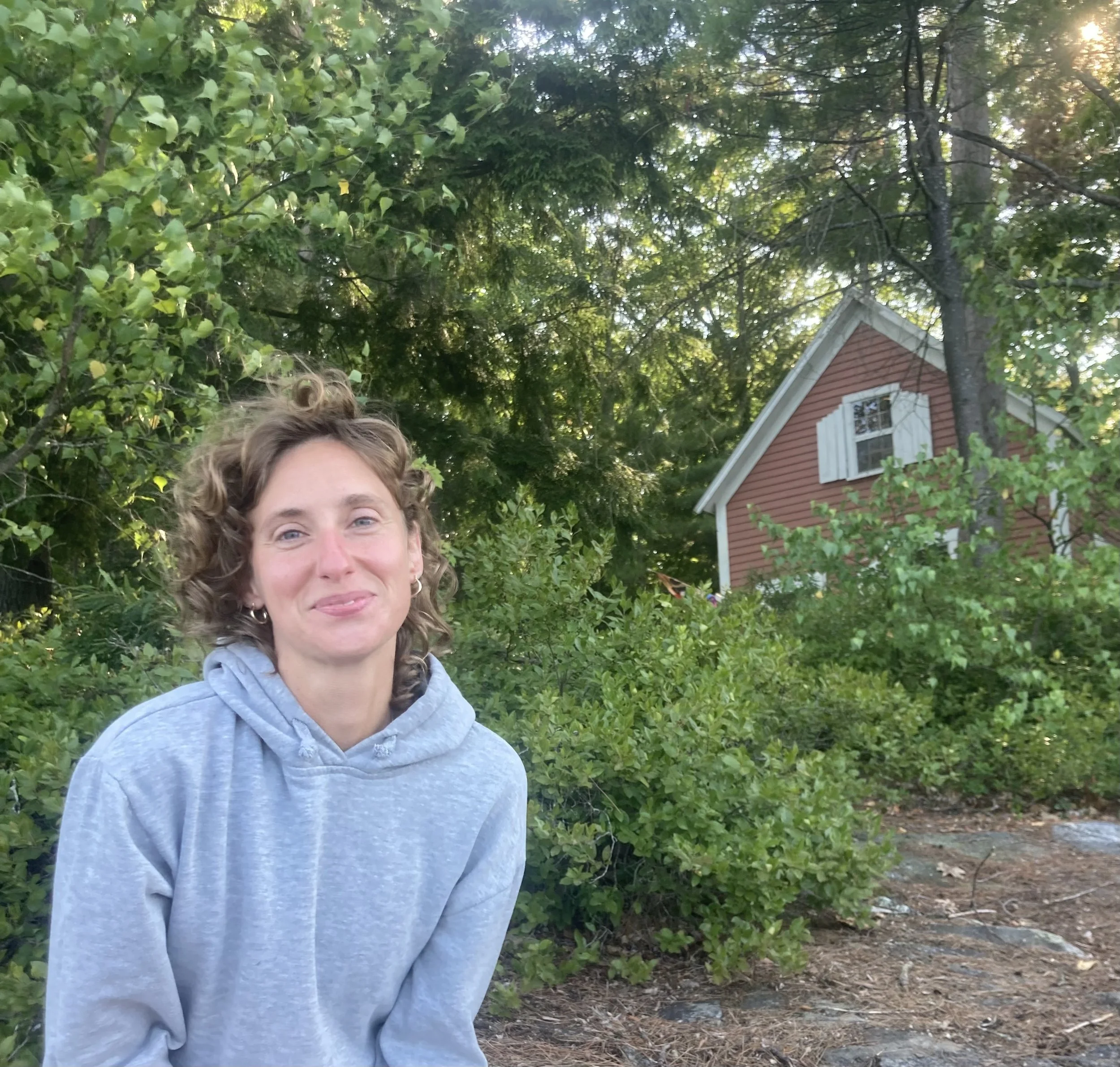
Meet Meredith Bove: Shiatsu Practitioner, Dancer, Artist, Educator.
Why did you want to become a Shiatsu practitioner?
Dance training introduced me to a wide variety of bodywork and somatic therapies, and I have found so many of these practices to be crucial in various healing processes. In general, I believe we all need access to practices that help us remember our bodies and their many interconnected, outer relationships in a world that reinforces fragmentation and isolation. When I first received shiatsu, I experienced it as a powerful way to understand this kind of interconnection—In Traditional Chinese Medicine, you cannot separate mind from body, or body from environment. Because of this, I think shiatsu is an amazing practice for “moving toward wholeness” in a way that resists modern individualist, separatist, and colonial practices. I love the vastness of this work, and I love sharing it with others—I have found its many practical applications to be surprising and profound.
What have you gained from this work?
A sense of lifelong learning—as I mentioned above, Traditional Chinese Medicine is a vast system—and more of an understanding of how essential movement, change, and regeneration is to supporting all life.
What do you hope your clients feel after working with you?
I hope clients have some of that feeling of “wholeness” that I mentioned—a sense that their bodies are integrated, interdependent systems. Additionally, shiatsu can have a powerful effect on the parasympathetic nervous system (“rest and digest” rather than “fight or flight”). Because there is so much in this world that can have our nervous systems in a constant state of “fight or flight,” I hope for clients to experience more balance in the parasympathetic nervous system so that they might access a state of rest, ease, and regeneration. Lastly, shiatsu can be very effective in addressing stagnation in the body, which can manifest as pain. So, I would hope for all clients to experience a relief from any pain that is the result of habitual patterns of tension or “holding” in the body.
How does your work inform your activism or understanding of the world?
I think there’s a direct link for me between the ethic of interconnection that shiatsu supports, and the necessity for all of us to strengthen this skill in response to systems of individualism. Also, capitalism would love for all of us to regard our bodies as dispensable tools that are only mobilized toward (mis)use for profit. When our nervous systems are balanced, we have more access to our whole selves, our creative and expressive capacities, as well as our capacities for agency and choice. I believe all of this can support a world where we help each other meet our basic needs, where we have capacity for resisting oppressive forces, and where we can access a fuller spectrum of humanity.
What's your favorite season of the year and why?
In somewhat stereotypical New Englander fashion, I love fall. It really is very beautiful in this part of the world. In the Traditional Chinese Medicine system, fall is the start of a downward energy cycle, as we move toward the deep dark of winter. Of course, impending winter can be hard to stomach, but I’ve learned to love the contemplation, rest, and coziness that fall, followed by the still and quiet of winter, can offer.
What has made you smile recently that you feel the need to share?
The WNBA playoffs are happening right now, and it’s the best. It’s like watching supreme goddesses of utter strength and will perform at the highest level—and it always seems like the teams that do the best are the ones who trust each other the most, and are the ones having the most fun together. It’s inspiring and joyous to watch.