
Collective Spotlight: Elizabeth Solomon
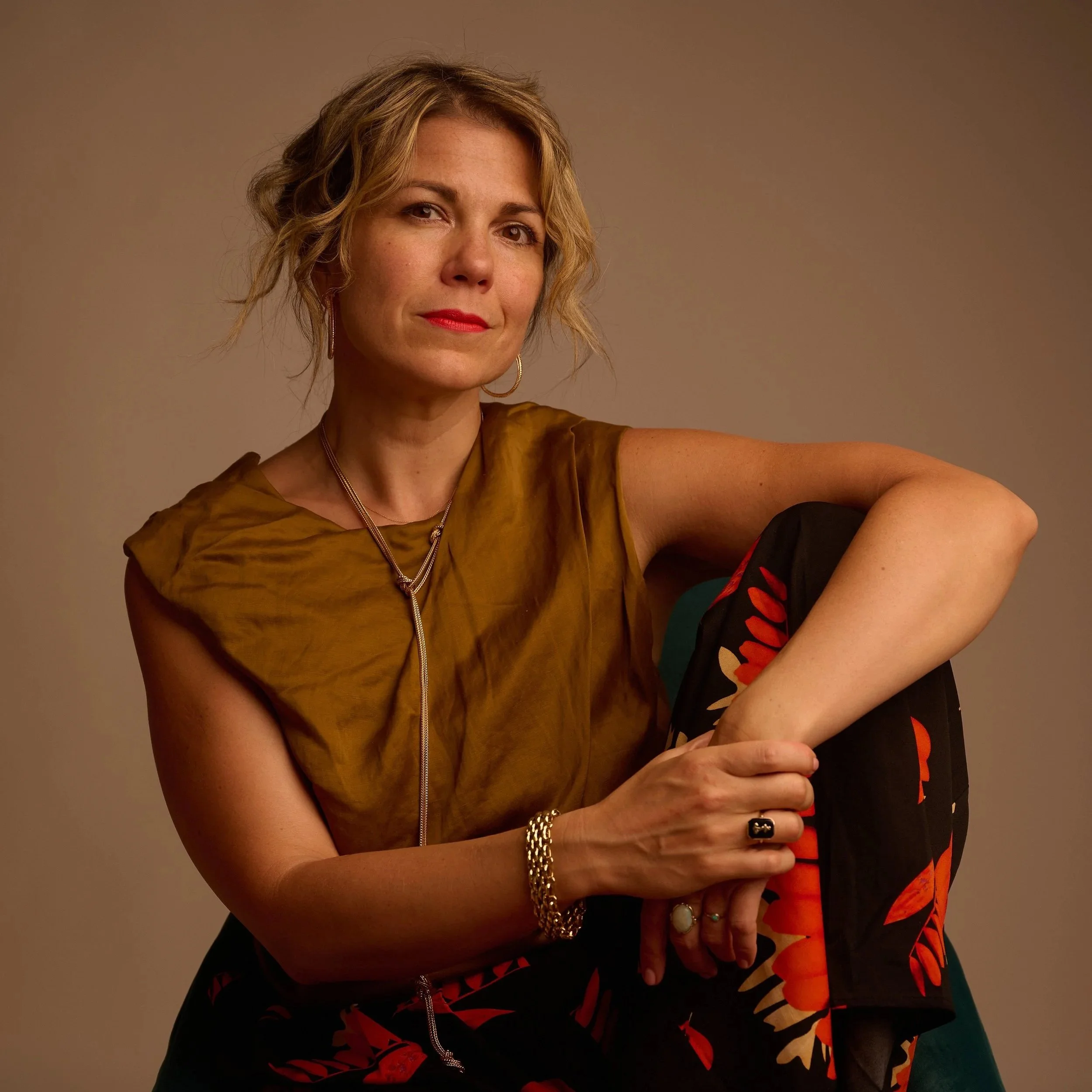
Meet Elizabeth Solomon, Family & Systemic Constellations Facilitator, and Leadership & Executive Coach
Why did you want to become a family and systemic constellations facilitator?
I have been fascinated by ancestors and the dead for as long as I can remember. There has always been a felt sense for me that the people who came before us do not simply disappear, and that our lives remain in relationship with theirs in ways we may understand only partially.
Long before I encountered constellation work, I was interested in family stories, lineage, what gets passed down, and the strange persistence of things that happened before we were born. When I eventually found Family and Systemic Constellations, something in it felt immediately familiar. It gave form to questions I had already been carrying for years.
It also gave me a way to work more fully with something I have come to believe deeply: everything happens in relationship. We cannot understand a person completely apart from the family, community, culture, history, and other systems they are part of. Seeing systemically means widening the frame enough to notice what becomes visible when we stop treating any one person as the whole story.
Professionally, I had kept encountering the limits of explanations that stopped with the individual. Someone could understand a pattern intellectually, know where it came from, want very much to change it, and still find themselves living inside it. Constellation work offered another way of seeing by asking not only what is happening inside a person, but what they belong to, what histories and relationships may still be present, and whether some of what they are carrying began somewhere else in the system.
I was drawn, too, to the way constellation work makes room for forms of perception that our culture does not always teach us to trust. I believe intuition is a natural human capacity, and that we have been taught to privilege certain ways of knowing while distrusting others. The body notices. We sense relationships and shifts in a room. Images, impulses, spatial relationships, and felt experience can all carry information before we have language for what we know.
For me, part of this work is reclaiming our permission to listen in those ways without abandoning discernment or critical thought. We do not have to explain everything before something can move, and sometimes what the body or the field reveals can take us somewhere analysis alone could not reach.
What have you gained from this work?
I have a much deeper respect for the systems we come from, for complexity and for the value of saying what is true, even when it is hard.
Constellation work has changed the way I understand responsibility, belonging, and inheritance. It is also helping me navigate my blended biracial family with more honesty and compassion. The work has helped me face truths that can be difficult to acknowledge, while also making room for the complexity of loving and belonging to more than one cultural and familial system.
I am more interested now in discerning what is actually ours to carry, what belongs somewhere else, and what becomes possible when we stop trying to resolve things that were never ours to resolve. Facing the truth does not always make things simple, but it can make them more real, and from there, more workable.
It has also changed my relationship to my own ancestry. I think we can become so focused on the wounds and dysfunction in our families that we lose contact with everything else that traveled to us. We inherit strength, humor, instinct, creativity, ways of surviving, ways of loving, and forms of knowledge that may have been present in a family for generations. The work has helped me become more curious about what I can receive from the people who came before me, rather than relating to inheritance only as something I need to heal.
And it has made me more comfortable with mystery. I don’t need to understand exactly why something happens in a constellation to pay attention to it. I can stay curious, use discernment, and let experience have a place alongside explanation.
What do you hope your clients feel after working with you?
I hope they feel more room inside themselves and more freedom to stand in their own lives.
Sometimes that comes through putting down something they have been carrying for a long time. Sometimes it comes through seeing a parent, partner, child, or ancestor differently. Sometimes the shift is much quieter, and a person simply feels more able to occupy their own place without needing someone else to change first.
I also hope people leave with more tenderness toward the complexity of the systems they belong to. Families are rarely made up of simple heroes and villains. When we widen the frame, behavior that once seemed incomprehensible can begin to make more sense in relationship to what came before.
What I want most is for people to leave more connected to themselves, to the people and histories they come from, and to whatever in their lives is asking to be lived now.
How does your work inform your activism or understanding of the world?
It has made it very difficult for me to look at human behavior outside of context.
Everything happens in relationship. Families have histories, organizations have histories, communities have histories, and countries have histories. Those histories shape who belongs, whose experience is remembered, who carries responsibility, what becomes difficult to speak about, and what gets passed forward.
Seeing systemically keeps asking me to widen the frame before I make a judgment. What happened before this? Who is missing from the picture? What relationships are shaping what I am seeing? What might look irrational from the perspective of one individual but make complete sense in the context of the system?
That does not remove personal responsibility. For me, it makes responsibility more precise. We can take responsibility for what is actually ours while becoming less likely to place the whole burden of a systemic problem onto one person.
This way of seeing informs how I think about leadership, conflict, social change, family, and healing. It reminds me that we are always affecting and being affected by one another, and that any meaningful change has to account for relationship.
What's your favorite season of the year and why?
Summer. I am big on SUN, grass, the smell of soil. I like the spaciousness, the ocean, reading books in the early 5am light, and feeling unlimited access to the outdoors.
What has made you smile recently that you feel the need to share?
I really don’t love social media. But every once in a while I go on Instagram and remember how many genuinely funny people there are in the world. People are FUNNY. Really, deeply funny. I can lose twenty minutes watching comedians and ridiculous observations about ordinary life, and I am always a little delighted by how much human creativity gets poured into simply making one another laugh.